
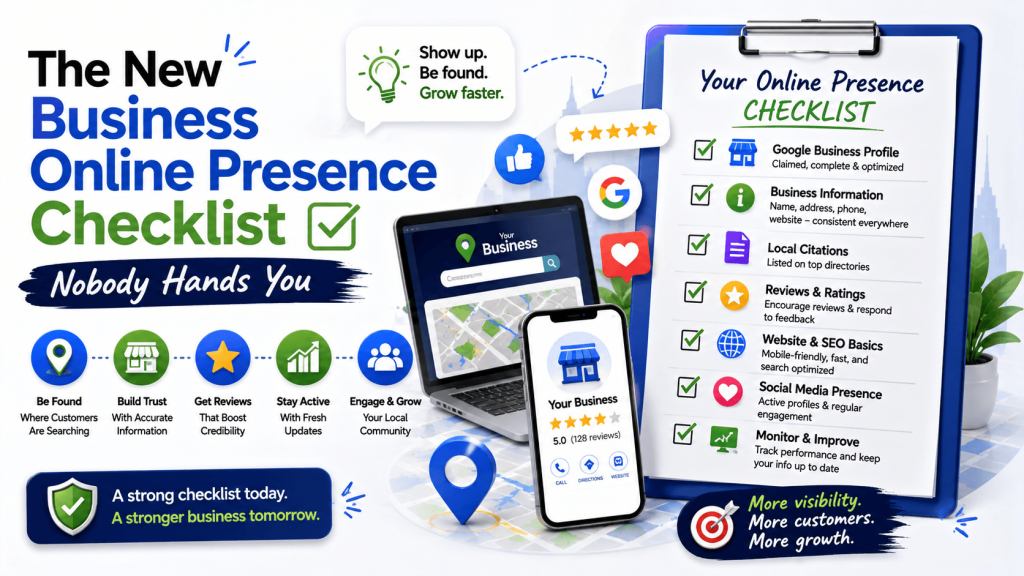
Starting a business comes with an overwhelming list of things nobody warns you about, and building an online presence usually lands somewhere near the bottom, squeezed in after permits, inventory, and a hundred other urgent tasks. By the time owners get to it, they often do it hastily, and hasty digital foundations tend to cause problems for years afterward.
A little structure early on saves a lot of cleanup later. Here’s the order that tends to actually work.
Start with the Information, Not the Design
Before worrying about logos or color schemes, nail down the unglamorous facts: your exact business name, address, phone number, hours, and a clear description of what you do. These details will be repeated across your website, your Google Business Profile, and any directories you join, so getting them right once at the start prevents chasing corrections across a dozen platforms later.
Decide now how you’ll format your address and phone number, and use that exact format everywhere. Small formatting choices, spelled-out versus abbreviated street types, for instance, matter more for consistency than people expect.
Claim Your Core Profiles Before Anything Else
A Google Business Profile is close to non-negotiable for any business serving local customers. Claim it immediately, even before your website is finished, since an incomplete website is far less damaging than an unclaimed profile that a competitor or automated listing might otherwise populate incorrectly.
From there, extend the exact same information to a handful of reputable directories. This is where a new business benefits from a platform like Rate Over, which gives newly launched businesses a straightforward way to establish an early, accurate footprint online, alongside businesses that have been operating for years.
Build Habits, Not Just a One-Time Setup
The businesses that maintain strong online presences don’t just set things up once; they revisit their information periodically. Set a quarterly reminder to check that your hours, address, and services are still accurate everywhere they appear, since even small operational changes, like adding a new service line, are easy to update in one place and forget elsewhere.
This habit matters more in the first year than any other time, since early inconsistencies tend to spread and compound the longer they go unnoticed.
Conclusion
A new business doesn’t need an elaborate online presence on day one. It needs an accurate, consistent one, built in the right order: information first, core profiles second, ongoing habits third. Getting this sequence right early on saves considerable time and confusion down the road.